From https://academichelp.net/blog/wordiness.html:
Most people think (well, in my opinion) being a writer means to be a person who knows lots of cool-sounding words, can manipulate them easily, and make candy even out of a trivial thought. And though writers can do all that, this is not what it means to be a writer. It’s just skills anyone can obtain by working with writing.

Anyways, such an understanding is not beneficial for aspiring writers. Generally, this approach leads to wordiness (and I’d even call it graphomania), when an author believes the more words he or she uses—in descriptions, dialogues, explanations, and so on—the better their opus will be.
In fact, professional writing has little to do with wordiness. I like to compare writing with chess. In chess, a player is not supposed to make unnecessary moves. In writing, an author does not write something just to make his or her book thicker. Every sentence and every word in the text serves a certain purpose: conveying a thought, creating a mood or an impression, describing scenery, and so on. When the goal is reached, there is no need to mark time, adding more and more wordy ornaments, or showing off by sounding smart.
Superfluous words do not help your reader. On the contrary, wordiness is a great distraction; words are the substance between you and your thoughts, and the audience. The more dense this substance is, the worse. Make sure every sentence you write is as clear, sharp, and precise as you can make it. Use a thesaurus to find words that would help you express your thoughts in the most exact way. Contract dialogues if their only purpose is to create the visibility of interaction between characters.
Wordiness is acceptable sometimes, though. For example, a character of yours can be eloquent and chatty, or it’s your deliberate literary technique that you use from time to time to create a certain effect, and so on.
From https://writingcooperative.com/use-stephen-kings-10-rule-to-have-a-sharply-edited-piece-b2c8740efe8:
Use Stephen King’s 10% Rule to Have a Sharply Edited Piece
Editing is the most crucial part of writing
Sude HammalJul 17, 2020·5 min read
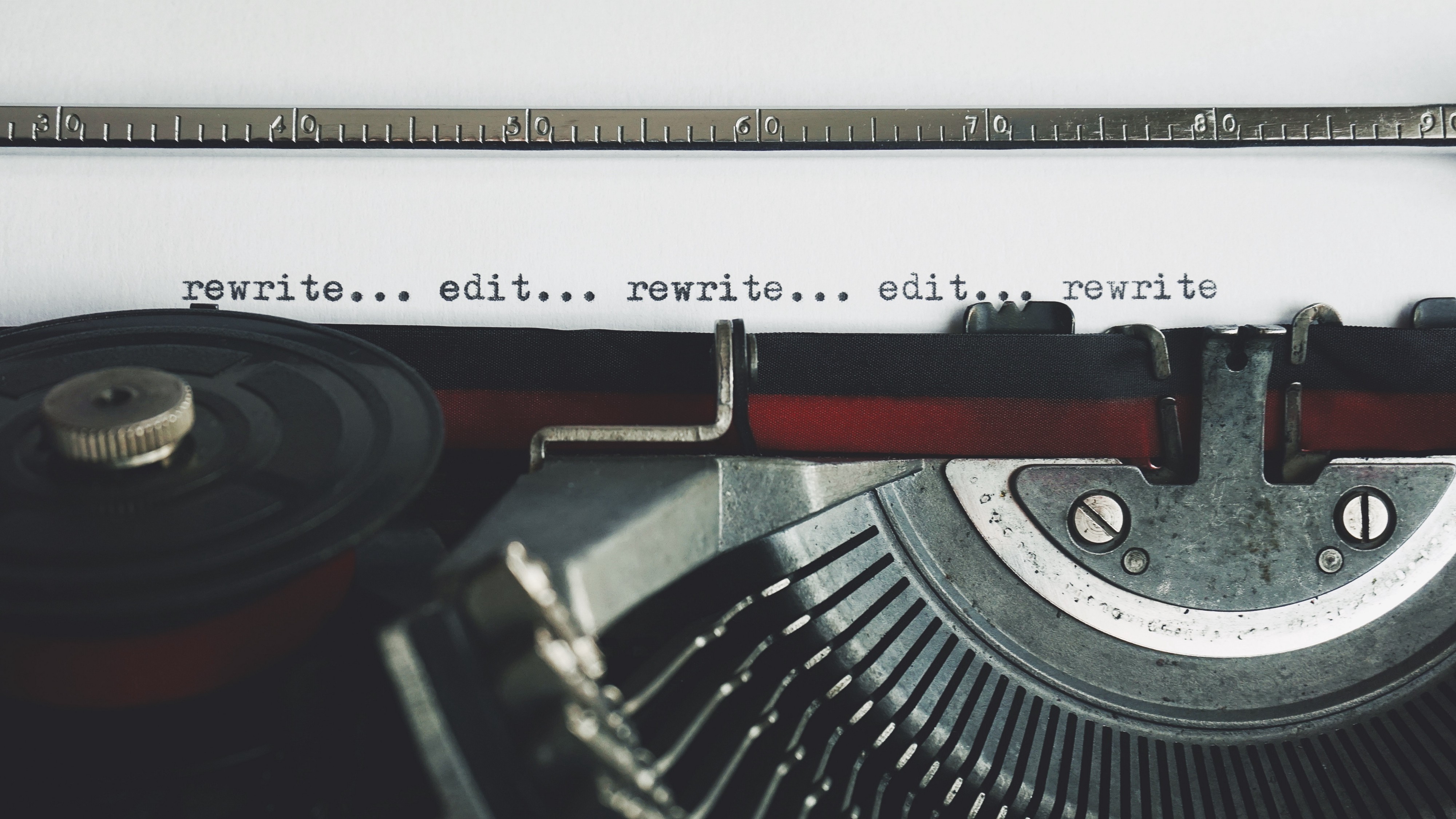
Almost all writers know finishing a piece isn’t only about writing but in fact, mostly editing it. An established writer uses his/her time to edit his/her piece a lot more than writing it. A lot of remaking and adjusting happens in the process of coming up with a clear, concise product.
When you write, you splurge out all of your thoughts on the paper or screen to not give them the chance to fly away from your mind; and when you edit, you rearrange all the misspellings, misconceptions, and the jumbles of words written hastily out of fear, to prevent them from vanishing after a few seconds.
You cut out some parts, shorten the sentences, sharpen the piece up. You laugh at the silliness of your expressions from your previous draft. You manage to do these by letting the draft sit, and check, sit, and check again.
The consensus is, editing is crucial, and a writer should spend more time on it than writing. It doesn’t matter if you think you are too careful, or you are an experienced writer, even the most blatant mistakes will be invisible to you in the first draft.
In his book, “On Writing: A Memoir of the Craft” Stephen King introduces an editing strategy he calls “the 10 percent rule.”
He simply says, when you finish writing your first draft of your writing, let it sit for a while — that “a while” can depend on the form of your writing, if it’s a novel we are talking about, let it sit a few days. But if an article, or in our case, a short Medium read, a day or a couple of hours would be fine — .
After it waited, turn back to it and delete the %10 percent of it. If it’s a 500-hundred-word draft, make it 450. But delete cleverly. Take out the unnecessary parts of your writing like needless adverbs, fillers, and excessive details.
Taking Stephen King’s advice, don’t get all sentimental with your first draft, be a little brutal to it. Cut out the excessive parts without hesitation, there are for sure parts to get rid of or rearrange.
Look out for words that don’t add anything to your writing and the meaning wouldn’t be lost if they were gone, and are downright unnecessary in getting to your point.
Start by deleting most obvious fillers in your writing
From writing reports or literature reviews in college, I’m used to utilizing words like “in order to”, “according to”, “for the reason that” in the assignments to up my word count and make it more explanatory. But the necessities of academic and creative writing are different. In creative writing, these words are just creating needless space and make everything sound more mechanical.
For an easy and encouraging start, check if you used those words, and replace them with shorter alternatives or delete that part altogether if they don’t disrupt the meaning when not involved in your sentence. Of course, these types of words aren’t the only needless part of your writing. Some other words and phrases also create unnecessary wordiness in your writing you don’t need or can replace.
From https://writeitsideways.com/working-past-wordiness-for-fresher-writing/:
Working Past Wordiness For Fresher Writing
May 3, 2012 Sarah Baughman Filed Under: Fiction, Language, Non-Fiction Image courtesy deathtothestockphoto.com
Today’s post is written by regular contributor Sarah Baughman.
I’ll give you twenty seconds to skim these paragraphs and tell me which one exhibits stronger, more engaging writing:
Paragraph A
The hottest month in Ayemenem would certainly have to be May. Each and every day is long and exceedingly humid. The river starts to dry up and black crows, which sit in trees that are a dusty-colored green, eat golden, sun-ripened mangoes. It is a time when red bananas as well as plump, yellow, odd-smelling jackfruits are starting to get significantly riper. Flies buzz around and around in the sweet-smelling air. Then, because they don’t understand what glass is, they fly right into the windows and are killed by the impact.
Paragraph B
May in Ayemenem is a hot, brooding month. The days are long and humid. The river shrinks and black crows gorge on bright mangoes in still, dustgreen trees. Red bananas ripen. Jackfruits burst. Dissolute bluebottles hum vacuously in the fruity air. Then they stun themselves against clear windowpanes and die, fatly baffled in the sun.
Even though I wrote Paragraph A, I hope you hated it. It’s my decidedly unimpressive 91-word rewrite of Arundhati Roy’s arresting beginning to her novel The God of Small Things. Roy’s version, at 55 words, is undoubtedly cleaner, tighter, and more powerful.
A lower word count doesn’t always point to superiority, but wordiness is best avoided, and it’s the main culprit lurking behind my rewrite’s failure.
Are you wordy? Recognize the signs
Scan your writing for the following symptoms of wordiness:
- “Being” verbs. You’ll have to use them sometimes, of course, but they often slow the pace of a sentence. Compare “still, dustgreen trees” to “trees that are a dusty-colored green.” My paragraph contains seven “being verbs”; Roy’s just two. Highlight the “being” verbs on a page of your WIP and try to cut them in half.
- Passive constructions. Passive voice, which occurs when the subject of the sentence receives action rather than performing it, inevitably clogs sentences. Compare the flies that “are killed by the impact” versus the flies that simply “die.”
- Filler words. We writers love words…maybe a little too much. Are all of our words necessary? My rewrite quickly bogs itself down under the weight of ” would certainly have to be,” “each and every,” “around and around,” and “it is a time when”. Play a game with your WIP: take a few sentences and try to rewrite them to be half as long, a third as long, even just an eighth as long. Experiment with what words you can cut without losing meaning.
- Clichés. We’ve read these so many times that when they pop up, it’s easy to read right over them. Except for the unnecessary space they consume in our writing, it’s almost like they don’t exist for all the impact they have on readers. My rewrite’s description of “sun-ripened” mangoes and “sweet-smelling” air are not only longer, but lamer, than Roy’s.
- Unnecessary adjectives and adverbs. When it comes to description, sometimes less is more. My use of “exceedingly” and “significantly” doesn’t help readers visualize the gravity of the description, and the ” plump, yellow, odd-smelling” jackfruits might just have gone a bit overboard; Roy’s startlingly clear verb (“bursts”) packs more punch.
Stop wordiness before it starts
Editing out unnecessary words is great, but can we train ourselves not to include them at all? When meaning infuses each word, we’re less likely to use too many. Consider minimizing unnecessary words by regularly employing the following language devices:
- Fresh verbs. Roy’s river “shrinks”; her crows “gorge”; her jackfruits “burst”; her flies “stun themselves.” These verbs aren’t typical; they also require less elaboration than my ho-hum “starts to dry up,” “eat,” “starting to get significantly riper,” and “buzz around and around.” Yawn.
- Active voice. Roy’s repeated subject-verb sentence construction lends immediacy to her writing. Your sentence structure can vary from this, of course, but putting subjects in charge of their verbs trims the word count and reads smoothly.
- Stark contrast. Moving quickly from one opposite description to another or juxtaposing contrasting images economizes words and efficiently establishes action or setting. Roy’s days are “long,” but the river “shrinks.” Birds “gorge” in “still” trees. Those trees are “dustgreen” while the bananas are “red.” Her flies first “hum,” then “die.” All in 55 words.
- Varied sentence length. Achieve unique rhythm by alternating short and long sentences. We’re ready to digest Roy’s “Dissolute bluebottles hum vacuously in the fruity air” in part because we’ve just been slammed with the fast– and effective– “Jackfruits burst.” In my rewrite, the sentences are all about the same length; there’s no break.
- Unusual description. When was the last time you thought of those flies wriggling on their backs on your windowsill as “fatly baffled?” A summer month as “hotly brooding?” Descriptions that make readers pause, think, and wonder need not be long; their strangeness carries the writing.
When it comes to wordiness, small choices add up. Though it’s easy to struggle with cutting into–and out of–our work, writing benefits from the spare, carefully crafted brilliance of a few well-chosen words.
From https://writingcommons.org/article/writing-concisely-and-avoiding-redundancy/:
Writing Concisely and Avoiding Redundancy
- Written by
- Brian Rapp
This article uses a Creative Commons license: CC BY-NC-ND 4.0.
Conciseness Improves Flow
Unfortunately, many writers use sentences that are too wordy. This is not to suggest that lengthy sentences can never be used (because they certainly can), but most of the time writers make the mistake of using more words than necessary to get their message across. Take this sentence, for example:
- “Michelle was supposed to have her car’s oil changed every 3,000 miles, and since it had been 3,000 miles since her last oil change, she took her car to the mechanic.”
This sentence is okay and makes sense, though the statement could be more precise if the author phrased it a little differently. Describing the action first, followed by the reason, would improve it:
- “Michelle had the mechanic change her car’s oil because it had been 3,000 miles since the last one.”
This sentence conveys the same message and is more succinct and direct. True, the sentence omits that Michelle “was supposed to have her car’s oil changed every 3,000 miles,” but we should know this already (or can presume so) from the word “because.” The first sentence is acceptable, but some of the words are superfluous, which can disrupt the flow of your research paper. Just as a machine should not have extra parts, a sentence shouldn’t have any extra words.
According to William Strunk and E.B. White, writers should also strive to put statements in the positive form (19). Readers prefer to be told what is, as opposed to what is not. For example, saying “He was late” is usually better than saying “He was not on time. Or, “She forgot” is usually more effective than saying that she “did not remember.” Though these alterations are subtle, they make your writing bolder and more concrete. The authors state, “Use the word not as a means of denial or in antithesis, never as a means of evasion” (19).
Redundancy Reduces Conciseness
Writing concisely also involves avoiding redundancies. Redundancy is when you use more words than necessary to express something, especially words and/or phrases in the same sentence that mean the same thing. Many writers are guilty of violating this rule at times, especially in their daily conversations. However, as you proofread your papers, try to double-check them for unnecessary phrases that you can omit or edit.
Here are some common examples of redundant phrases:
- “small in size” or “large in size”
- “true facts”
- “basic fundamentals”
- “past history”
- “smiled happily”
- “evolve over time”
- “consensus of opinion”
Think about it: if something is small, it’s small—you don’t need to tack on “in size” for clarification. If an event took place in history, then you wouldn’t need to specify that it took place in “past” history” (as opposed to what, “present” or “future” history?). If something is a “fact,” by definition it’s true (unless the writer is using it for sarcasm or irony). If a person smiled, it can be assumed, in most cases, that the individual was happy; there’s no need to preface the verb with the adverb “happily.” This could depend on context—for example someone could “smile nervously” if they were shy—but in most cases the extra word is unnecessary.
Be Careful of Overusing Adverbs
Adverbs are often the source of egregious redundancies, and writers should be careful not to overuse them. Stephen King, one of the most successful novelists out there, is certainly not a fan of them: “I believe the road to hell is paved with adverbs, and I will shout it from the rooftops” (118). If you notice that your writing includes an inordinate amount of “–ly” adverbs, then you might need to examine your documents more closely. Here are some other examples of unnecessary “-ly” adverbs:
- “shouted loudly”
- “raced hurriedly”
- “whispered softly”
- “deliberated thoughtfully”
- “finished completely”
- “jumped quickly”
Of course, adverbs are not always a bad thing and can in fact be useful when you want to emphasize something to carefully convey meaning. For instance, “Steve drove crazily down the highway, putting every other driver at risk.” In this case, drove, by itself, doesn’t imply anything other than the act of driving. But crazily describes the way in which Steve was driving, so the adverb here is informative and makes sense if the reader knows that other drivers were at risk. By contrast, when someone shouts, it’s already implied that he or she is doing so loudly, so there’s no reason for this description because it doesn’t add any extra information. Likewise, you wouldn’t need to inform your reader that someone raced hurriedly (does anyone race slowly?) or whispered softly (does anyone whisper loudly?).
Sometimes writers have a habit of overusing adverbs, even if they do make sense. For instance, “Steve drove crazily, chaotically, and wildly down the highway, putting every other driver at risk.” In this case, only one of the adverbs is necessary since they all have the same essential meaning. Because the reader gets the point with just one adverb, the additional ones (i.e., chaotically, wildly) are redundant.
Also, you can improve how well you get the message across by eliminating the adverb and choosing a better verb in the first place. For example, “The geologist looked closely at the volcanic rocks that she had found.” This sentence is fine, but here is a different way to say it: “The geologist examined the volcanic rocks that she had found.” Because the geologist examined the rocks, we can assume that she looked at them closely. This is just a subtle change, but it reads a little better. Here’s a rule to keep in mind: weak verbs usually depend on adverbs.
Redundant words and phrases make your sentences sound repetitive, so do your best to avoid using them. A good exercise to try is to go through the first draft of your next paper and circle every adverb that you spot. Then, look at each of them and determine which ones are needed and which ones you can throw out. Usually, the more adverbs you can eliminate, the stronger your paper will be. You want your arguments to be cogent, of course, but you don’t need to go too far with flowery writing. As Strunk and White say, try to keep it simple and don’t fall into the trap of overwriting: “Rich, ornate prose is hard to digest, generally unwholesome, and sometimes nauseating” (72). You can become a better writer by avoiding redundancies and learning to construct your sentences more concisely.
Avoid Needless Repetition
Repetition can be useful, but not when you don’t need it.
Consider this sentence:
There are those who claim that the internet, a widely used online source of information, can be a positive or negative influence on students, depending on how it is used.
The internet is described as a “widely used online source of information,” but unless your reader has never heard the word “internet,” an unlikely situation in today’s world, he probably doesn’t need to hear what it is—this would be unnecessary repetition. The phrase, “There are those who claim that” is also unnecessary here; unless you want to stress who is making this claim, you can just begin with your claim and avoid the wordiness of adding that other people have had the same thought that you are about to present. You can trim your writing by cutting extra information, or even extra words, to make it more interesting for readers.
Also check out:
298 Filler Words & Phrases That Rob Your Writing of Its Power
How to avoid using “he/she/it” repetitively in action (a blog post)
Too much wordiness/telling in workshop fiction? (a blog post)

 KC Storytellers