Jump to Section:
How to Weave Threads of Tension Through Your Story
Basics of Fiction Writing – Narrative Tension
8 Effective Ways To Write Page-Turning Tension For Your Novel
From https://www.well-storied.com/blog/how-to-weave-threads-of-tension-through-your-story:
How to Weave Threads of Tension Through Your Story
Every story is a carefully woven tapestry of tensions.
And while narrative tensions can vary in both nature and magnitude, every form of tension has the power to create dissonance that’s vital to a story’s success. It’s this dissonance, the divide between a character and an object of their desire, that will keep readers turning pages, eager to see how tensions will resolve.
But not all threads of tension are created equal — and some are far too easy to snap. How can you ensure a deft hand as you weave a little necessary tension through the pages of your book? Let’s discuss a few key techniques today, writer!
Why is it important to create narrative tension?
More than anything else, tension is at the heart of a compelling story. By nature, humans are curious creatures, and it’s the narrative tensions that we as authors weave through our stories that will keep readers turning pages. Why? Because every instance of tension poses at least one question.
What choice will she make? Will he survive? Who will win the competition? Will they defeat the dark lord?
Instances of tension can vary widely, especially in their source. For instance, dissonance can occur between:
• A character and their beliefs (or spiritual & mental well-being)
• A character and their physical safety (or the safety of those they’re responsible for)
• A character and another character (or group of characters)
• A character and their goal (or desire)
Among other sources — and tension can vary by nature, as well. It can occur between lovers, friends, acquaintances, or enemies. It can result from a physical roadblock or a new rule added to the playbook. It can present an opportunity for growth or a chance to stay true to oneself. So where in the world does an author begin?
Note that at the heart of every instance of tension is a character. If readers don’t first care about the characters involved, no amount of tension in the world will encourage them to keep turning pages. They simply won’t care what happens next. So, take the time to build well-developed characters first. Your narrative tension will thank you for it.
Three key tips for creating powerful narrative tension…
The art of building tension begins by creating dissonance between a character and an object of their desire: safety, certainty, happiness, success, etc. Ensuring that tension heightens the impact of your story? Well, that’s a bit tougher. Take a look at my top three tips below:
#1: Give Weight to the tension at hand
Not every instance of tension must bubble into conflict, but it’s more than likely to happen in most stories. And when it does, consequences will ensue. Making sure that readers know what potential consequences lie on the horizon is key because tension doesn’t work unless stakes do.
What does your character risk by taking action or speaking up? What do they risk if they don’t? If readers don’t know what lies at stake, any tension you’ve build will fail to carry weight.
It’s also important to identify the consequences your character considers (or fails to consider) before deciding how they will act. Your character’s fear of or desire for certain consequences can pressure characters to act outside of their typical nature — or to make the same old mistakes.
#2: Thread tension with emotional impact
Tension should create dissonance within your character even if the source of tension is external. Why? Because tension that has no emotional impact on your characters won’t impact your readers either.
Internal dissonance can unveil itself in a variety of forms: anger, fear, insecurity, aggravation. No matter what your character is feeling, make sure their emotional reaction plays into their character arc as a whole — stirring up old fears, flaws, regrets, or false beliefs that will further heighten the dissonance at hand.
#3: Stir up Uncertainty in Readers
No matter how well you’ve threaded your tension with consequence and emotional impact, it will still fail to carry weight if every prior instance has had the same result. Just think of how many times you’ve known a character in mortal peril was unlikely to actually die — or even bear a scratch!
To ensure that tension results in page-turning curiosity, work to build uncertainty in readers.
This doesn’t mean forcing your characters to act in ways that aren’t true to their nature. In fact, this is another area in which your character’s fears, flaws, regrets, and false beliefs — or even their simple lack of knowledge or experience — can come into play.
If readers are inside your character’s head, they’re likely anticipating the same consequences your character fears or desires. By flipping your characters’ expectations on their head from time to time, you’ll ensure your readers never quite know what to expect from the narrative tension at hand, making it all the more nail-biting.
And so tension begins with the dissonance between a character and an object of their desire and deepens with the application of consequence, emotional impact, and uncertainty. But how can you actually weave all of this into your story?
The importance of building tensions big and small…
We’ve talked about the various types and sources of tension, but we’ve yet to discuss how vastly instances of tension can differ in magnitude. Some threads of tension will weave through the entirety of your story:
Will she catch the killer? Will they fall in love? Will he destroy the cursed stone?
These threads of tension are often called macro-tensions, and they create the questions found at the core of your story’s plot arcs and character arcs. Make sure to check out the articles I’ve linked for more information on how to weave macro-tensions into your story.
On the other hand, instances of tension can exist for a single scene or run only for a few chapters. These threads are typically called micro-tensions and can add to the ups and downs your characters experience in their journeys:
Will she find another clue? Will he embarrass himself on the first date? Will they find a way to escape the dungeon?
Beyond the advice we’ve already discussed, the biggest key to ensuring that the tensions you build will keep readers turning pages is to keep at least one thread of tension alive at all times.
You can resolve micro-tensions if your story’s bigger threads are still very much at play. But if you resolve your story’s macro-tensions during the climactic sequence, make sure you still have a micro-tension or two to drive readers through to the very last page of your book. As a general rule, introduce a new question before you answer another.
On the whole, building tension can be a tough topic to discuss because it exists in so many shapes and sizes. It’s the hesitation before a first kiss, the dread of a setting sun in the wilderness, and the fear of admitting to yourself that you’ve done wrong. From the threat of tyranny to the muddled breaths of a child with the flu, there’s no way to condense tension into an easy box.
From http://indiebooklauncher.com/resources-diy/basics-of-fiction-writing-narrative-tension.php:
Basics of Fiction Writing: Narrative Tension
Saul Bottcher, IndieBookLauncher.com—Posted 13 August 2013
Introduction
Narrative tension is often described as “the reason you turn the page”—in other words, the reader’s desire to know what happens next.
Narrative tension has three components: anticipation, uncertainty, and investment. As you’ll read below, there are different ways to create each component, and the way you mix them together will determine the flavour of the narrative tension in your book. Think of it like a stew: stew always contains a liquid base, solid ingredients, and seasonings, but your choices as the cook determine whether it’s an Irish Stew or a Cajun Gumbo.
Narrative tension should not be confused with conflict. Conflict is when characters are placed in opposition with other characters or with their circumstances. Conflict on its own does not guarantee narrative tension, and narrative tension doesn’t always come from conflict.
Narrative tension should also not be confused with pacing, which is the speed at which you tell the story. A fast or slow pace can support tension, but pacing alone doesn’t create tension.
So how do you create narrative tension? Let’s get down to details.
The First Component: Anticipation
The first component of narrative tension is anticipation. For the reader to want to turn the page, they must believe there is something interesting on the next page. It doesn’t matter whether the reader is ultimately right, wrong, or unsure about what they’re going to find. The only failure is when the reader assumes nothing special will happen.
Anticipation arises when the reader becomes aware of possibilities. Imagine a story that will center around the protagonist being caught in a forest fire. There are several ways you could make the reader aware of the possibility of a forest fire:
- Directly: the car radio broadcasts a fire warning for the area while the protagonist is on their way.
- Indirectly: a park ranger warns the protagonist to be careful with their campfire.
- By drawing on the reader’s own experiences or common sense: the forest is described as very dry, and the reader knows this increases the danger of a fire.
- Through foreshadowing: before leaving for the trip, the protagonist sees their neighbor building a bonfire from the same type of wood as grows in the forest they plan to visit.
None of these methods is necessarily superior to the others. The direct method may seem simplistic, but if the narrative tension is focused on the consequences of the fire, rather than on whether or not the fire happens, the direct method could avoid misdirecting the reader’s attention.
The Second Component: Uncertainty
Though the reader anticipates something will happen, they must have a feeling of doubt or lack of resolution. They may doubt their understanding of the situation, or be unsure of the outcome. This compels them to continue reading to obtain closure.
The reader’s uncertainty can take many forms. For example, picture a courtroom drama in which the protagonist is on trial for murder. The story follows the trial from opening statements to the final verdict. Here are different ways to set up this story to create different types of uncertainty and narrative tension:
- The reader knows whether the protagonist is guilty or not, but the facts of the case are complex, and the reader does not know what the verdict will be
- The reader knows the protagonist is guilty and struggling with it internally, but the evidence is shaky and the reader does not know whether the protagonist will admit their guilt
- The reader knows the protagonist is guilty, but does not know how or why the protagonist committed the murder
- The reader knows the protagonist is guilty and will be exposed in court, but does not know how the protagonist’s friends and family will react
In abstract terms, these examples show (in order) uncertainty about the outcome of an event, uncertainty about an internal struggle, uncertainty about a motivation or cause, and uncertainty about consequences.
The amount of uncertainty doesn’t determine the degree of narrative tension. Narrative tension can just as well be produced by an intense focus on two possibilities, such as the verdict at a murder trial, or by a completely unknown set of possibilities, such as a group of explorers lost in a wilderness full of unknown dangers.
The Third Component: Investment
A combination of anticipation and uncertainty may mildly arouse the reader’s curiosity, but to create strong narrative tension, the reader must also feel invested in the outcome.
The most well-known form of investment is a positive identification with the protagonist, which leads the reader to want good outcomes for them. However, investment has many dimensions. It can be:
- Intellectual or emotional. A typical “puzzle” mystery is based on the reader’s intellectual investment in discovering the solution, rather than any emotional investment in a particular character.
- Positive or negative. A revenge story is based on the reader’s desire to see bad things happen to a hated character, rather than a desire to see good things happen to a loved character.
- Directed at a character, group, society, institution, or even an idea. A story of a political uprising might have likeable and unlikable characters on both sides, but the reader may be primarily invested in the outcome of the uprising and the political ideas under debate.
Any time the reader wants a specific outcome, they are invested.
Summary
Narrative tension is the reader’s desire to know what happens next. It arises from a combination of anticipation, uncertainty, and emotional investment. These components can be combined in many ways to create countless flavors of narrative tension.
Narrative tension is not the same as conflict, though it can arise from conflict. It is not the same as pacing, though it can be supported by pacing.
From https://writersedit.com/fiction-writing/8-effective-ways-write-page-turning-tension/:
Common plot structures
Below is a brief outline of key moments for high tension to build your overall plot tension around. There’s no hard and fast rule for exactly when or how often tension should be high; stories come in all different shapes and structures.
You need speed in the opening, middle, and climax of your story.”—Courtney Carpenter
The outline looks at three common story structures: the Three-Act Structure, the Dramatica Act Structure and the Hero’s Journey. Even if your story doesn’t work with any of these structures, try to see if some points in your story are similar to the ones listed.
Three-Act Structure
- Inciting incident
- Plot point 1
- Midpoint
- Plot point 2
- The black moment*
- Climax
*The black moment is often depicted as a low action point; however, this shouldn’t be accompanied by a drop in tension.
Dramatica Act Structure
- Act 1
- Overall Throughline
- Main Character Throughline
- Impact Character Throughline
- Relationship Throughline
- Act 2
- Overall Throughline
- Main Character Throughline
- Impact Character Throughline
- Relationship Throughline
Hero’s Journey
- Call to adventure / Refusal of call
- Crossing the threshold
- Ordeal, death and rebirth
- Reward, seize the sword*
- Resurrection
*Depending on what the reward is, this moment might be an explosion of tension, or its release.
Breathers
Lulls in tension are important to keep the reader interested, but not worn out. They also help emphasis the “gap”: a moment of dropped tension contrasts against increased tension.
Sometimes these lulls are the calm before the storm. If so, be sure to make the action that follows the lull doubly intense.”—Jessica Page Morrell
The story’s genre largely dictates how often to use breathers. For example, a romance has more than a thriller. The target age group is also important; YA novels are typically high-paced with lots of tension and fewer rests.
Breathers shouldn’t go on for too long: somewhere between a sentence and a single scene. The length you choose will depend on your genre and how close you are to your climax.
When dropping tension, you need to maintain reader interest. A short moment can be the relief and victory when a character survives an ordeal or succeeds in a challenge. Longer breathers can include hints and foreshadowing to gently remind the reader of the stakes.

6. Introduce exponential tension
A reader may become disinterested if, halfway through the book, a character faces a problem with a similar or greater level of consequences to a challenge they’ve already survived.
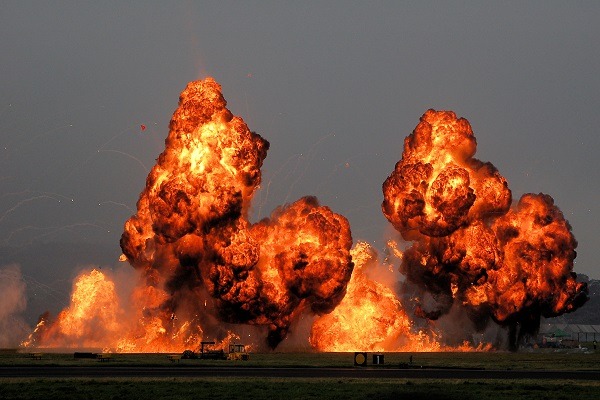
Order your points of tension in increasing value. If your story starts with a bomb about to go off, you’ll need to work hard to keep upping the stakes: a bigger bomb, or a direct attack on a loved character.
Depending on your genre, the threat may involve the character’s physical, psychological, emotional, spiritual or relational well-being.”—Steven James
Tense situations can be familiar to all, or be directly important to a character the reader is attached to. Maybe your story starts with your protagonist disarming their hundredth bomb, but while they have confidence in their technical abilities, they’re terrified of that job interview coming up.

 KC Storytellers